

With the EU Battery Regulation now in force and the Carbon Border Adjustment Mechanism(CBAM)moving into its mandatory compliance phase,the full-lifecycle carbon footprint of batteries has become a non-negotiable metric for global new-energy companies when assessing core battery suppliers.As a result,decarbonization,digitalization,and data transparency have quickly risen to become the key battlegrounds in supply chain competitiveness.
Against this backdrop,CATL held its 2026 Carbon Neutrality in Core Operations Launch.Combined with on-the-ground observations by EnergyTrend,a energy sub-brand under TrendForce,at CATL’s Z-Base,it is clear that the battery manufacturing leader is using its advanced smart-manufacturing prowess and robust carbon-data management systems to raise the bar for industry entry and spearhead a broader shift toward zero-carbon industrial transformation.
Achieving Carbon Neutrality in Core Operations–A First for the Industry
At the launch event,CATL officially confirmed that it had achieved carbon neutrality across its core operations by the end of 2025–becoming the world’s first battery maker to reach this milestone while shipping at a terawatt-hour(TWh)scale.
To date,all 20 of CATL’s battery plants have secured ISO 14068-1 zero-carbon factory certification.Nineteen of these are located in China,while the remaining one is in Thuringia,Germany.Across all certified facilities,100%of the electricity used in core operational processes comes from zero-carbon sources.
Robin Zeng,Chairman and CEO of CATL,noted during the event that corporate decarbonization has evolved from a mere social responsibility into a central growth driver.As global carbon-neutrality efforts accelerate,zero-carbon batteries will soon cease to be a competitive differentiator and become a baseline requirement for market participation.
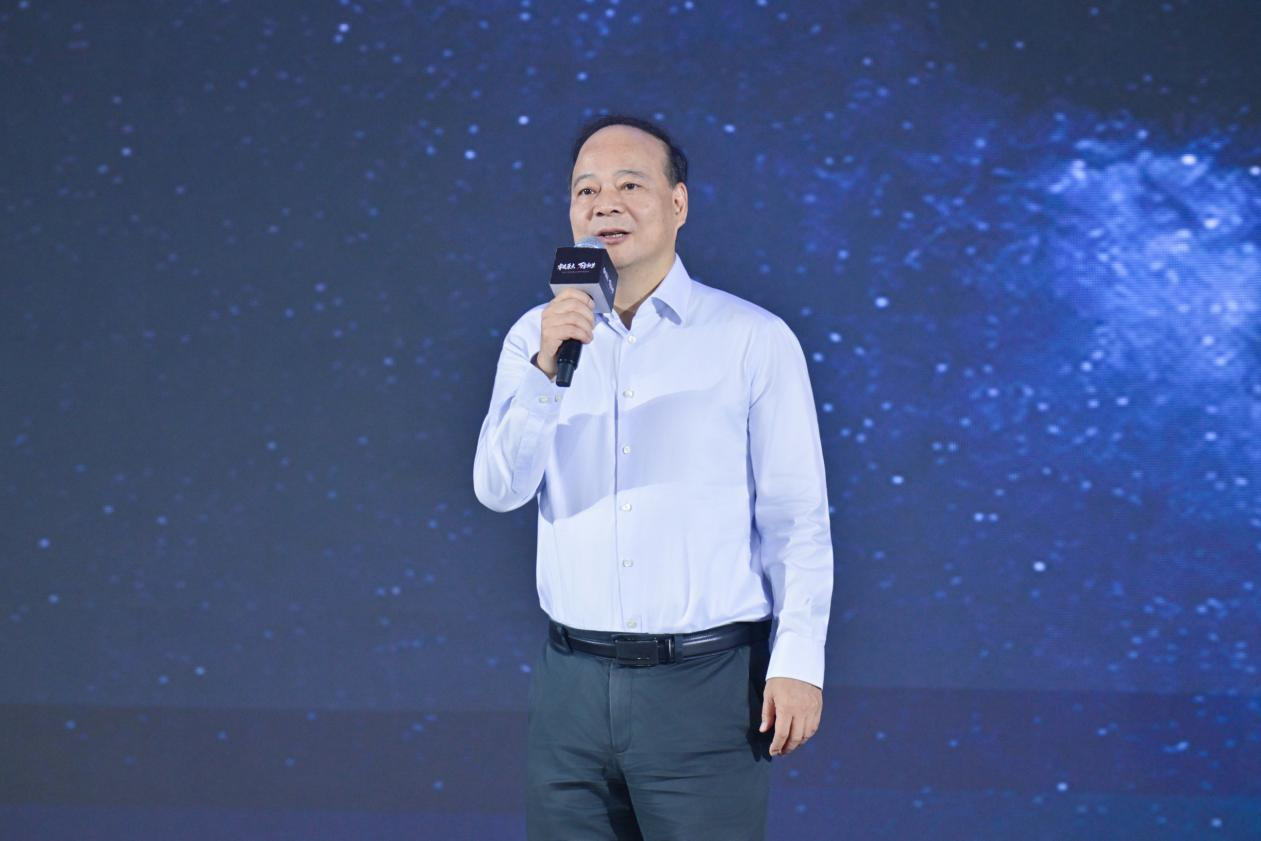
Robin Zeng(Chairman and CEO of CATL)
Green Smart Manufacturing:Efficiency and Data Transparency Go Hand in Hand
Jiang Li,Vice President,Board Secretary and Head of Corporate Sustainable Development Management Committee of CATL,stressed that carbon neutrality cannot be built on estimates–it demands reliable data,clearly defined boundaries,and systematic execution.To meet this need,CATL developed its own carbon-data traceability and management platform–CATL Carbon Chain Management System,enabling precise monitoring,full-chain traceability,and dynamic control over emissions across all manufacturing sites and along the upstream and downstream supply chain.
This granular approach to carbon data is woven into every stage of production.During its visit to Z-Base,EnergyTrend observed a production line nearly one kilometre long operating at a pace of“one battery cell per second.”To uphold quality at such scale,CATL has integrated AI-powered visual inspection into the cell-production process,swiftly detecting even the smallest surface defects and ensuring that only flawless cells reach customers.
Notably,in the facility’s advanced-technology display area,CATL showcased a sodium-ion battery capable of stable power supply at-40°C.This breakthrough in extreme-temperature performance directly addresses the long-standing challenge of winter instability in energy-storage plants situated in high-latitude regions,while also enhancing the reliability and safety of electric mobility solutions in cold climates–thereby expanding the potential applications of zero-carbon battery technology.

CATL Headquarters(Ningde,Fujian)
Driving Decarbonisation Across the Entire Value Chain
Having met its operational emissions target,CATL now faces the larger challenge of achieving carbon neutrality across its entire value chain.At the conference,the company unveiled its roadmap to full-value-chain carbon neutrality by 2035,alongside a new set of Green Procurement Guidelines.Bryan Huang,Head of Procurement Center at CATL,stated that CATL will continue to intensify efforts in material innovation,green material production,and low-carbon logistics to drive down emissions at every link in the value chain.
From 2027 onwards,submitting verified carbon-footprint data will become a mandatory condition for new supplier onboarding.At the same time,CATL has launched its Zero-Carbon Supply Chain Empowerment Initiative,initially partnering with 30 core suppliers on deep-joint decarbonisation projects.Suppliers that demonstrate outstanding low-carbon performance will receive preferential treatment,including priority order placement and long-term strategic cooperation agreements.
Leveraging its enormous purchasing power,CATL is effectively transmitting low-carbon standards upstream to global mining and battery-material suppliers,thereby accelerating the green transformation of the entire industrial chain.On the international front,its Thuringia plant in Germany has maintained zero-carbon factory certification for two consecutive years,providing a concrete example of how overseas production can be successfully localised and decarbonised.
Beyond Passenger Cars:The Rapid Expansion into All Scenarios
The technological spill-over from batteries is also breaking down traditional sector boundaries.At the conclusion of the site visit,EnergyTrend took a ride on the“East Lake Star”sightseeing vessel,which is powered by CATL batteries.The 27-metre commercial boat,equipped with a 293 kWh battery pack and a designed cruising speed of 15 km/h,demonstrated impressive zero-emission operation and exceptionally low noise levels.

East Lake Star(Ningde,Fujian)
More broadly,zero-carbon battery technology is extending far beyond passenger electric vehicles–into heavy-duty truck battery-swapping networks,marine shipping,and industrial electrification.In the power sector,energy storage systems(ESS)have already emerged as CATL’s second growth engine,reflecting the accelerating penetration of zero-carbon batteries into every conceivable application scenario.
The New Industry Benchmark
Taken together,ultra-high manufacturing yields and fully traceable,end-to-end carbon footprints have become the new baseline for the global new-energy industry.As carbon-management requirements become ever more embedded in international trade rules,companies across the entire supply chain–both upstream and downstream–must integrate efficient manufacturing with transparent,verifiable data if they are to maintain their competitive edge throughout the coming decade of global energy transition.
